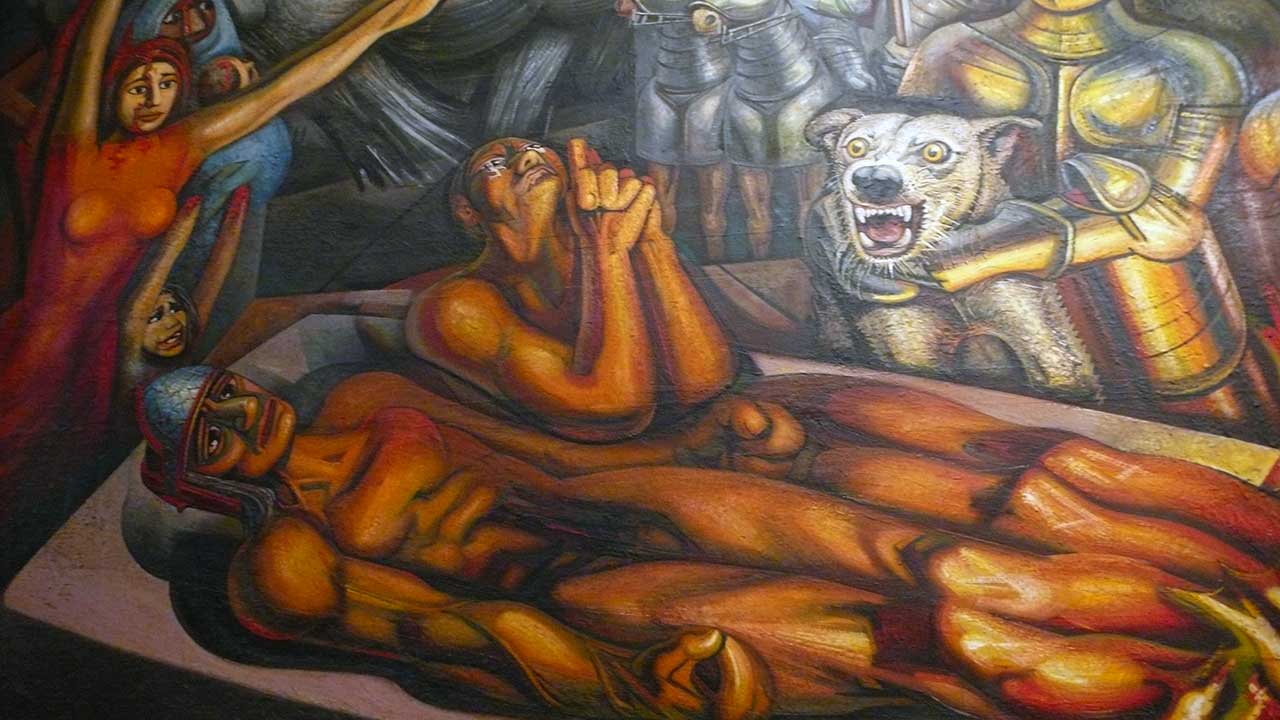
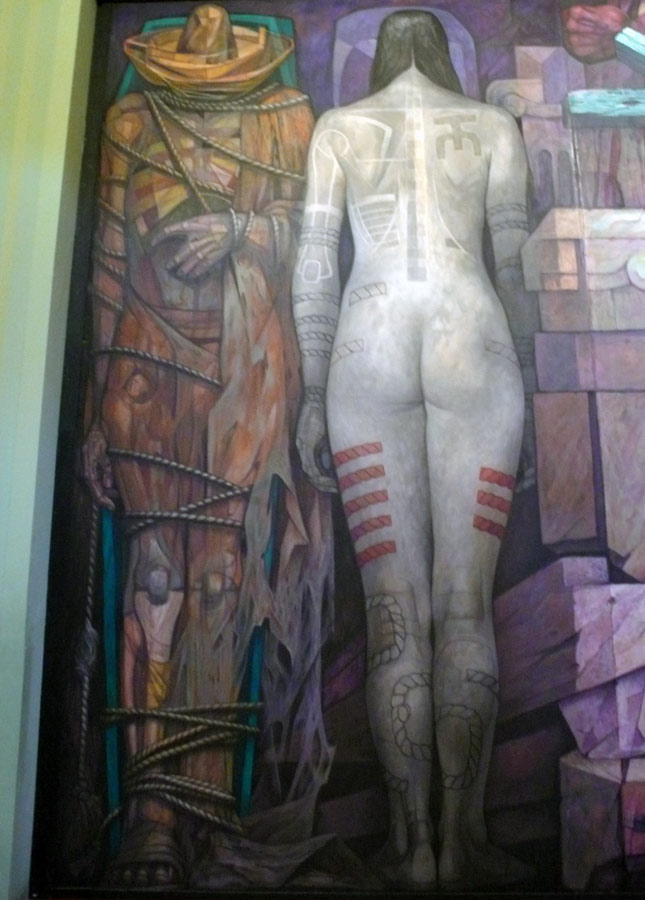
Their relevance goes far beyond the artistic dimension and is closely related to the social and political history of Mexico of that time.
Mexico
In 1910 went through a Revolution that ended up with Porfirio Diaz' dictatorship and utterly changed the popular base of the society, implementing several reforms, such as land reform, protection of the national industry or universal education.
In such historical context a nourished group of artists decided to create a national, popular and revolutionary art form, capable of building a new Mexican identity.
They chose the art of muralism for being situated in public space and for its potential to reach the entire population. Therefore, the muralism was a reaction against the small format paintings such as portrait, a genre created exclusively for celebrities and stored in private galleries or houses. The muralists rejected such form of art, considering it an upper-class invention.
That political dimension is essential to understand the artistic practices of the muralists. They wanted to reach the popular classes with the messages on the walls. Their art was conceived to influence the masses and educate them.
The most famous representatives of the muralists visited Europe during their academic years. In countries such as Spain, France and especially Italy the Renaissance frescoes and mural art throughout the history could be studied.